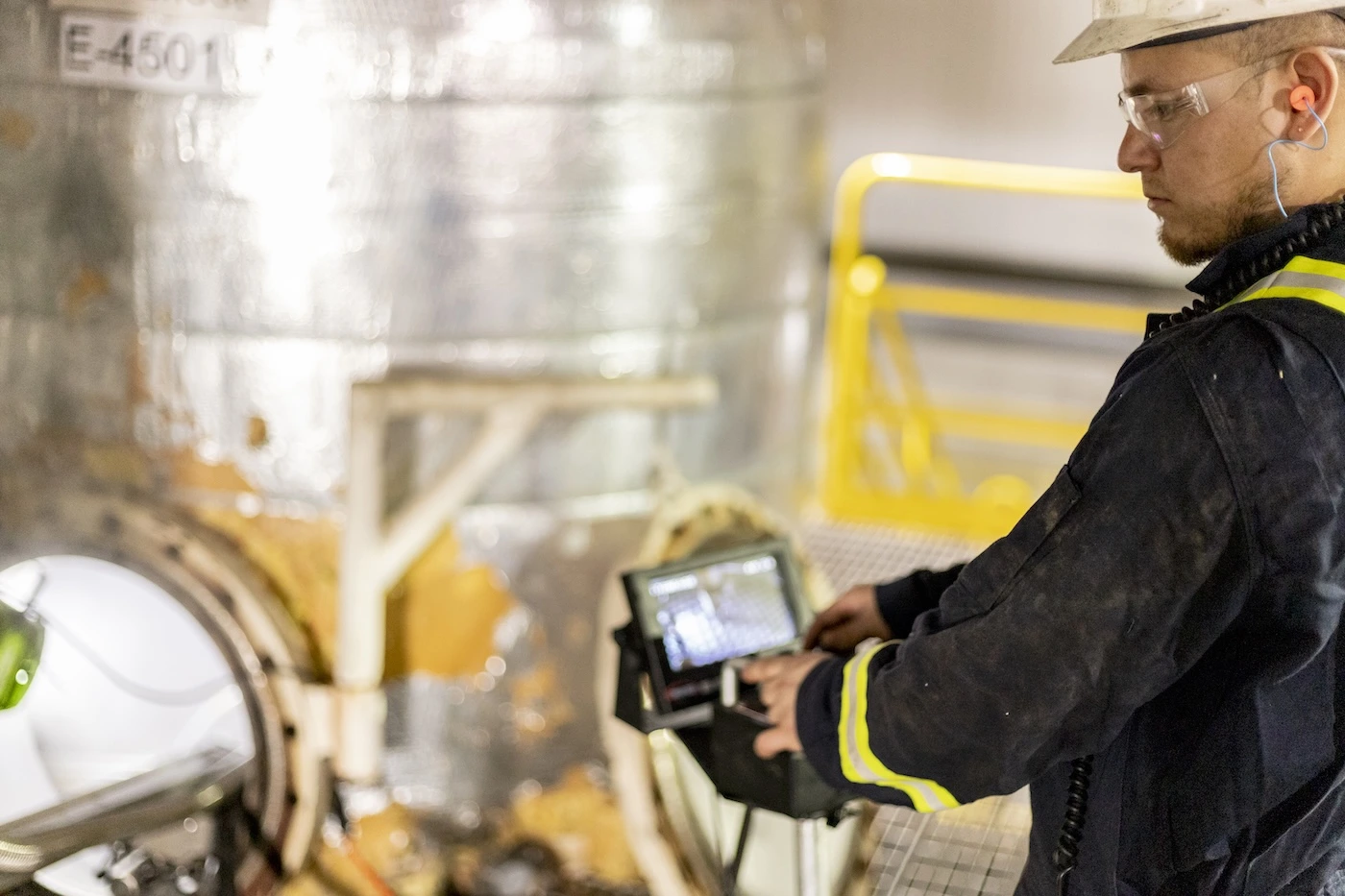
Automated Lancing
Automated lancing is a precision hydroblasting method used to clean tube bundles, heat exchangers, and internal vessel components using remotely operated equipment.
In traditional manual lancing, operators often work in or near confined, high-pressure environments where visibility is limited and cleaning consistency can vary from tube to tube. This can introduce safety exposure, fatigue, and inconsistent results across large or complex systems.
Automated lancing eliminates these challenges by moving the operator outside the vessel while maintaining precise, controlled cleaning inside. The result is more consistent performance, reduced exposure to risk, and improved repeatability across the entire system.
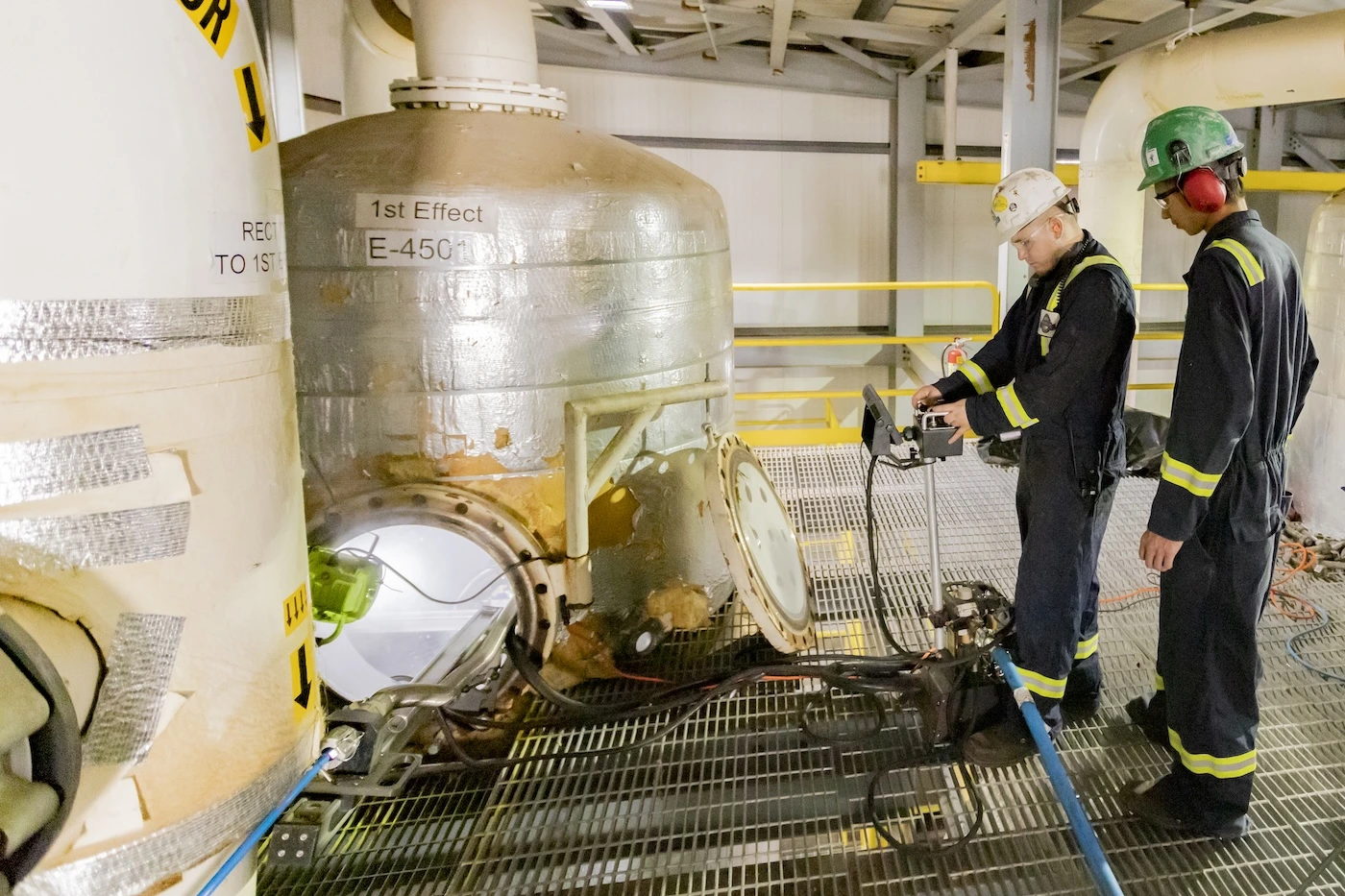
How Automated Lancing Works
Automated lancing follows a controlled, repeatable process designed to safely clean internal tube systems from outside the vessel. Internal inspection can be performed separately using camera systems if required.
System Setup & Positioning
Automated lancing equipment is positioned and configured for access into the tube bundle or vessel entry points.
Remote Deployment & Launch
Multiple rotating flex lances are deployed into the system to begin simultaneous tube cleaning operations.
Controlled Cleaning Cycle
Operators manage pressure, speed, and lance movement remotely, ensuring consistent cleaning performance across all tubes as the system advances through the bundle.
Bidirectional Cleaning Passes
The system cleans in both directions to improve removal of fouling, scale, and debris, increasing overall tube coverage and effectiveness.
System Completion
Once cleaning is complete, equipment is withdrawn and the system is returned to a service-ready condition.
When to Use Automated Lancing
Automated lancing is best suited for applications where internal fouling impacts performance and consistent cleaning is critical:
- Heat exchanger tube bundles
- Evaporators and condensers
- Fouled or scaled internal tube surfaces
- Industrial vessels requiring high-pressure internal cleaning
- Large systems where manual cleaning introduces variability
- Outage or turnaround environments requiring repeatable results
- Pre-inspection cleaning prior to internal evaluation
After cleaning, internal camera inspection can be performed to verify tube condition and identify areas requiring repair (performed by others as needed).
Industries Which Often Benefit From Automated Lancing
- Chemical processing, ethanol, and biofuels
- Power generation
- Industrial manufacturing
- Oil and gas
- Any facility with heat exchanger or tube-based systems
Performance Benefits
Automated lancing delivers controlled, repeatable cleaning performance while improving safety, efficiency, and overall system reliability.
- Improved cleaning consistency through automated, regulated operation
- Reduced downtime through faster, more efficient cleaning cycles
- Better coverage compared to manual lancing methods, including bidirectional cleaning
- Reduced exposure to confined-space entry and high-pressure hazards
- Less operator fatigue and variability across shifts and crews
- Improved overall operational efficiency through remote-controlled execution
When Not to Use Automated Lancing
Automated lancing may not be the best solution when:
- Vessel geometry does not allow proper lance access
- Internal components are too delicate for pressure-based cleaning
Why Choose
Premium Plant Services?
Premium Plant Services brings advanced automated lancing technology and field expertise to complex industrial environments where performance and reliability matter.
- Advanced multi-lance automated systems
- Remote-controlled operation for precise cleaning control
- Capability to clean complex and large-scale tube systems
- Experienced crews in high-risk industrial environments
- Proven execution during outage and turnaround work
Schedule Automated Lancing Services for Safe Blockage Removal
When fouling or blockages restrict system performance, automated lancing restores internal flow safely and efficiently.
Using advanced automated equipment, we remove hardened deposits and obstructions from tube systems while keeping operators outside the vessel—helping reduce downtime and return equipment to service with confidence.